Introduction to social networks
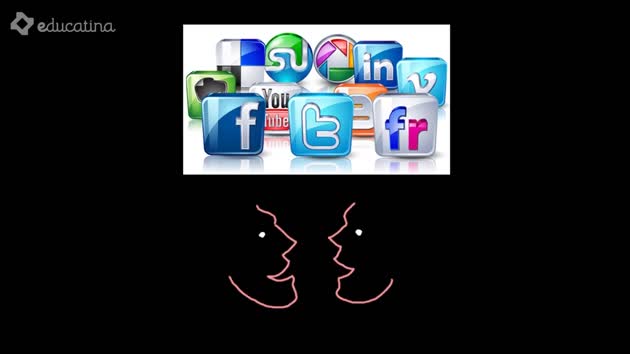
Social networks are one of the most representative examples of web 2.0, whose diffusion began to occur during the first years of the new century. Web 2.0 consists essentially in making the visitor of a website not a passive reader, but a transcendental piece in the construction of content. Social networks are media focused on finding people to relate virtually. Do not confuse them with virtual dating services, because the first leg of social networks is to base the relationships established with other people through points in common (usually people who could already be related in real life, in kinship, in kinship, profession, etc.). Example of them are Facebook, LinkedIn and Twitter. Social networks are based on six degrees, which says that anyone in the world can be connected through no more than six intermediaries or levels. If a person knows 100 people, and each of them knows the same number of people, the original individual can send a message to 10,000 people (at the second level of the social relationship). Each new level would add 2 zeros to the equation. The challenge that social media services have been overcoming, increasingly conveniently, is to make the way to establish the virtual social relationship automatic, so that two people who do not know how much they have in common can be found relatively Easy through a social network. Among the benefits it offers are: • They offer a place of virtual interaction. • Create relationships between people or organizations based on some criteria (kinship, profession, tastes, etc.). • They allow to disseminate information with great agility. • Segment the information you want to receive. • They facilitate expressly and synthesized personal opinion. Social networks offer amazing possibilities in the communicative field, and we know that communication is the basis of all good education, so it is a fairly promising idea to exploit this tool in favor of teaching work.