The bacteria
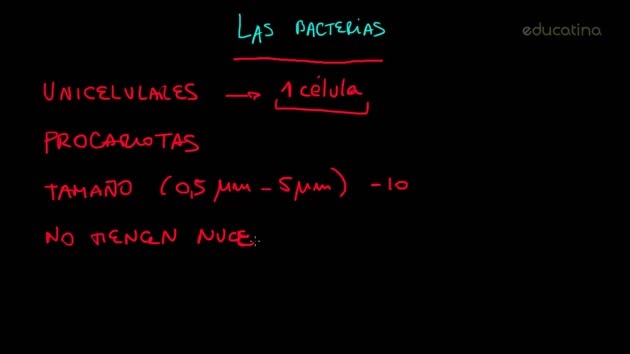
Bacteria are unicellular organisms, formed by a single cell, whose structure definitely differs from that of a eukaryotic cell. Belong to the family of prokaryotic cells, which are smaller than eukaryotes, and range from 0.5 to 5 um, added that they lack a nucleus defined with a membrane, their DNA being organized in a single chromosome located In the cytoplasm, within a structure called nucleus. Most bacterial chromosomes are circular and contain thousands of genes inside, which serve to produce all proteins that bacteria needs to survive and reproduce. In addition, many bacteria have an extracromosomal and circular DNA, called plasmid, which contains genes for resistance to antibiotics, among other threats to stability. Another of the main differences of bacteria for animal cells and ours, is that they are in addition to the cytoplasmic membrane, a cell wall that provides resistance to the environment that surrounds them, including, for example, flagella or other systems that They allow them to move and move. By not having these cells, mitochondria or organels surrounded by membranes, the cytoplasmic membrane fulfills a determining function, since it is responsible for the generation of energy, the production of proteins and the maintenance of the internal medium through the passage of a substance through her. The cell wall is formed by a substance called peptidoglycan, which, as a curiosity, is destroyed by the famous penicillin antibiotic, which inhibits the synthesis of the substance, preventing the formation of said cell wall and producing the death of the bacteria. Following with the mobility of bacteria, we have the flagella, which are long filaments composed of proteins, and also pilis, which are shorter structures and mainly used in the transfer of genetic material between bacteria, known as bacterial conjugation. The structure of the ribosomes of these bacteria is slightly different from that of eukaryotic ribosomes, and have a subunit greater than 70s, instead of 80s, as in eukaryotes, although, however, its function in protein synthesis, is the same. In turn, these bacterial cells contain vacuoles, which are granules responsible for example, to store substances such as glycogen, useful for energy reserve. Thus, that from a unicellular structure, bacteria can survive without the need for tissues, as is in the case of multicellular organism, for example.